
行动党议员Todd Stephenson:民主韧性与自由的重要性
——在“捍卫民主与自由、反制外国干涉”国际研讨会上的演讲
演讲者:Todd Stephenson,行动党议员
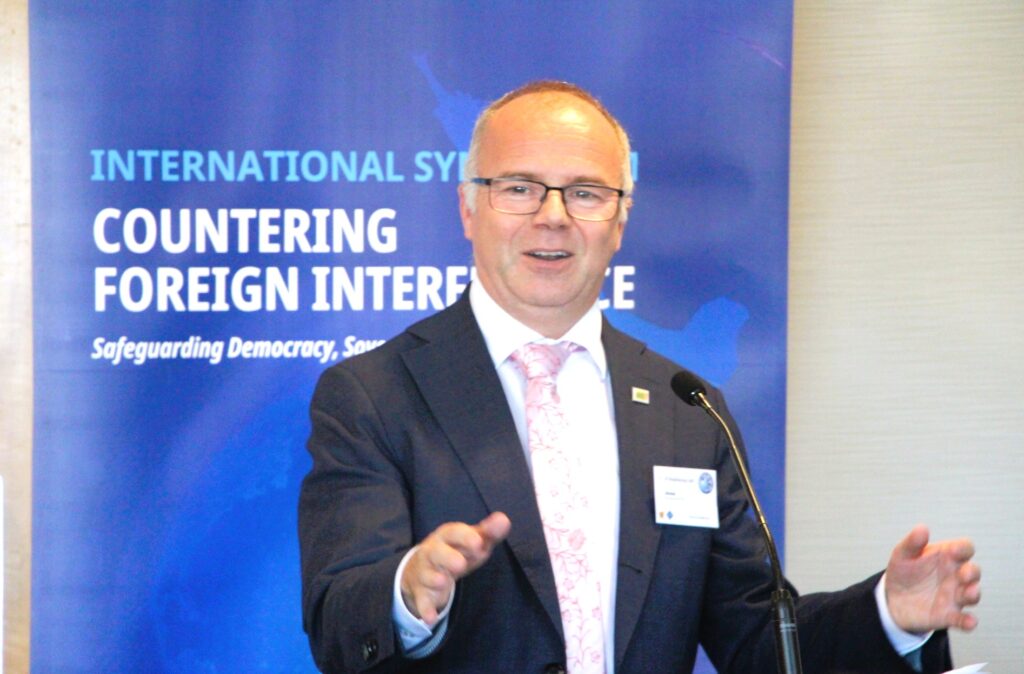
Todd Stephenson 议员
–
女士们、先生们、各位嘉宾、各位演讲者,以及所有热爱自由的朋友们:
首先再次感谢塔斯曼联盟主办这场重要的研讨会,并让我们今天齐聚一堂。
对于不认识我的朋友——我相信这样的人不少——我是托德·斯蒂芬森,新西兰行动党的一名首次当选国会议员。虽然我未必像今天其他演讲者那样资历深厚,但我很高兴能为这一重要讨论贡献自己的声音。
我也要向我的议会同事海伦·怀特致意。海伦和我将向议会同事们通报本次活动及其讨论内容,其中包括今晚我将会见的新西兰副总理戴维·西摩阁下。
副总理是台湾的坚定支持者,目前行动党四位国会议员都曾访问过那座美丽的岛屿。
我居住在皇后镇,这是一个非常宜居的地方。我出生并成长于南地,在但尼丁完成大学学业。我成长于20世纪80至90年代——那是新西兰经历深刻经济自由化与社会改革的时期。
在这一时期,我们的经济逐步对外开放,政府干预减少。我们在生产、消费以及商业运作方面获得了更大的经济自由。
更重要的是,作为贸易国家,我们进一步融入世界——取消进口许可,大幅降低关税,废除补贴。与此同时,还实施了劳动力市场改革、国有资产出售以及国家体制结构调整。
在社会领域,也发生了重要改革:同性恋合法化、《怀唐伊条约法庭》职权扩展、新西兰无核政策,以及——对行动党成立至关重要的——混合比例代表制(MMP)选举制度的确立。
当然,人们可以对这些改革持不同看法。但对我而言,关键在于:在成长过程中,我亲眼见证了新西兰人如何通过民主投票实现变革。这让我深刻理解民主的重要性。
遗憾的是,当今世界民主国家数量远少于非民主国家。这正是举办今次活动的重要原因——我们需要探讨如何维护民主及其核心价值。
新西兰是世界上持续时间最长的民主国家之一,但我们绝不能对此掉以轻心。我坚定信奉个人自由、机会平等与有限政府原则——这些正是行动党的核心理念,也吸引我投身政治。
事实上,行动党的基本原则之一是:
“作为个体的人天然拥有对自己生命的所有权,并应当有权按照自己的判断自由行动,只要他们尊重他人享有同样的自由。”
这一理念建立在自由民主的基本权利之上,包括:
- 言论与意见自由
- 结社与集会自由
- 投票与参与政府的权利
- 免受歧视与法律面前平等
- 公正审判与正当程序权利
- 思想、良心与宗教自由
- 新闻自由与获取信息的权利
作为国会议员,我每天都必须思考这些权利,而言论自由对我尤为重要。
在当今世界,威权政权通过干涉、胁迫与虚假信息积极破坏开放社会。在这种背景下,自由表达并非奢侈,而是民主社会识别、讨论并抵御威胁的关键机制。
民主韧性,是指一个社会在面对外部压力、内部分裂和颠覆企图时,仍能坚守核心价值的能力。健全制度、法治、透明治理以及与志同道合国家的联盟,都至关重要。但如果没有对言论自由的有力保护,这些都无法有效运作。
我曾因在议会邀请一些争议性演讲者而受到批评。但我深知,言论自由确保少数群体能够发声,为其重要议题进行倡议,它是保护少数群体的关键权利。作为议员,我经常为他人提供表达观点的平台,即使我未必认同他们的立场。
言论自由是民主的氧气:它让思想自由竞争,揭露谎言,监督权力,并推动创新与进步。
为什么言论自由在反制外国干涉中如此重要?因为威权行为体——尤其是中共政权——依赖压制异议来维持控制。他们将这些手段输出海外:恐吓侨民社区、向学界与媒体施压、传播虚假信息,并通过统战工作影响制度。
如果没有言论自由,我们无法公开讨论这些威胁、点名其性质或组织应对。公开辩论使我们能够揭露统战活动、网络入侵、经济胁迫以及渗透政治、大学与公民社会的行为。
我们也必须持续审视新西兰自身的防护机制。作为司法委员会成员,我曾深入参与《刑法(反制外国干涉)修正案》的审议。该法案去年通过,这是议会迟来的重要举措。
今天我们还听取了PILLAR提出的《外国影响力透明法案》建议,我一定会将这一想法带回议会讨论。
当我们发现本地的异常现象时,也必须直言不讳。
近期媒体广泛报道黎智英在香港被囚事件。新西兰媒体,包括国家广播电台,都进行了报道。然而我获悉,RNZ中文平台并未提及此事。这是刻意审查,还是相关人员出于自身及家人安全的担忧?
我认为,RNZ需要审视其中文新闻服务的独立性,同时也要保障员工安全。
新西兰拥有捍卫自由的光荣传统——从战争贡献到太平洋伙伴关系皆是如此。我们支持一支现代化国防力量,强化与台湾关系,并对外国干涉保持警惕。
朋友们,民主韧性要求我们积极捍卫那些习以为常的权利。
通过捍卫言论自由与人权、推动跨党派与国际合作,并坚决反对一切形式的审查,我们才能建立威权干涉无法征服的社会。
让我们共同致力于建设一个更加自由、更加坚韧的未来。
谢谢大家。
Democratic Resilience and the Importance of Freedom
Speech to the International Symposium on Safeguarding Democracy and Freedom, and Countering Foreign Interference.
Todd Stephenson
Ladies and gentlemen, distinguished guests, fellow speakers, and friends of freedom.
Thank you once again to the Tasman Union for hosting this important symposium and bringing everyone together today.
For those of you who don’t know me – and I’m sure that’s quite a few – I’m Todd Stephenson, a first-term ACT New Zealand Member of Parliament. While I don’t feel as qualified as many of the other speakers you’ve heard today, I’m very happy to add my voice to this important discussion.
I’d like to acknowledge my fellow Parliamentary colleague, Helen White. Helen and I will ensure our colleagues know about this event and what was discussed. That will include New Zealand’s Deputy Prime Minister, Hon David Seymour, whom I’ll be with this evening.
The Deputy Prime Minister is a strong supporter of Taiwan, and four of the current ACT MPs have visited that beautiful island.
I live in Queenstown. It’s a lovely place to call home. I was born and raised in Southland and attended university in Dunedin. I grew up in the 1980s and 1990s – a time when New Zealand was going through a great deal of economic liberalisation and social reform.
Over this period, our economy was opened up and government intervention reduced. We gained more economic freedoms in what we could produce and buy, and in how we conducted business.
Importantly, we further opened to the world as a trading nation – removing import licences, slashing tariffs, and eliminating subsidies. There were labour market reforms, asset sales, and other changes to the structure of the state.
There were also important social reforms: homosexual law reform, changes to the jurisdiction of the Waitangi Tribunal, New Zealand’s anti-nuclear policy, and – key to the establishment of ACT – the adoption of the Mixed Member Proportional voting system.
We can, of course, have different views on these changes. That is not the point. The point for me is that, growing up, I witnessed first-hand how New Zealanders could exercise their democratic right to vote for change. I came to appreciate for myself just how important democracy is.
Sadly, we live in a world today where democratic countries are vastly outnumbered by non-democratic ones. That’s why events like this are so important – to discuss and debate how we safeguard democracy and its accompanying values.
While New Zealand is one of the world’s longest continuous democracies, we cannot take that for granted. I am deeply committed to the principles of personal freedom, opportunity, and limited government that define our party and attracted me to politics.
In fact, one of the core principles of ACT as a political party is this: “That it is inherent in the nature of human beings as individuals that they are the owners of their own lives and must be free to act according to their own judgments so long as they accept and respect the like freedom of others.”
That sentence is underpinned by the important rights in a liberal democracy, including:
- Freedom of expression and opinion (free speech)
- Freedom of association and assembly
- The right to vote and participate in government
- Freedom from discrimination and equality before the law
- The right to a fair trial and due process
- Freedom of thought, conscience, and religion
- Freedom of the press and access to information
As a Parliamentarian, it is important that I think about these rights – and others – every day. Free speech is one that is particularly important to me.
In a world where authoritarian regimes actively seek to undermine open societies through interference, coercion, and disinformation, the ability to speak freely is not merely a luxury – it is the essential mechanism that enables democracies to detect, debate, and defend against such threats.
Democratic resilience is the capacity of a society to withstand external pressures, internal divisions, and attempts at subversion while preserving its core values. Strong institutions, the rule of law, transparent governance, and alliances with like-minded nations all contribute. But none of these can function effectively without robust protections for freedom of expression.
I’ve faced criticism for hosting speakers others don’t agree with at Parliament. What I recognise is that freedom of speech has ensured, over the years, that minorities have been able to speak and advocate about issues important to them. It is a key right that protects minorities. As a Parliamentarian, I often give others the opportunity to express their views, even if I might not hold the same position.
Freedom of speech is the oxygen of democracy: it allows ideas to compete openly, exposes falsehoods, holds power to account, and fosters innovation and progress. Why does freedom of speech matter so much in countering foreign interference? Authoritarian actors – particularly from regimes like the Chinese Communist Party – rely on silencing dissent to maintain control. They export these tactics: intimidating diaspora communities, pressuring academics and media, spreading disinformation, and seeking to influence institutions through united front operations.
Without freedom of speech, we cannot openly discuss these threats, name them, or mobilise responses. Open debate allows us to expose united front activities, cyber intrusions, economic coercion, and attempts to infiltrate politics, universities, and civil society.
We must also continue to look at our protections within New Zealand. As a member of the Justice Select Committee, I was intimately involved in the review of the Crimes (Countering Foreign Interference) Amendment Act, which passed last year. These changes had been proposed for many years, and it was pleasing to see Parliament finally address them.
Today we also heard from PILLAR about their Foreign Influence Transparency Bill. I’ll certainly be taking this idea back for discussion with my colleagues.
We also need to call out other local curiosities when we see them.
Recently there has been a lot of media coverage about Jimmy Lai’s imprisonment in Hong Kong. New Zealand media, including Radio New Zealand, have carried the story – which you could say reflects badly on the Chinese government. However, I’ve been told that Radio New Zealand’s dedicated Chinese portal has not mentioned the story. Is this deliberate censorship, or are those staff involved in the portal worried about themselves and their families?
I’d suggest Radio New Zealand needs to examine the integrity of its Chinese news service while also ensuring the safety of its staff.
New Zealand has a proud tradition of defending freedoms – from our wartime contributions to our Pacific partnerships. We support a modern defence force focused on alliances, stronger ties with Taiwan, and vigilance against foreign influence. Friends, democratic resilience demands the active defence of the rights we take for granted.
By championing freedom of speech and related human rights, fostering cross-party and international commitments, and rejecting censorship in all its forms, we build societies that authoritarian interference cannot conquer.
Let’s commit to a freer, more resilient future together.
Thank you.


